

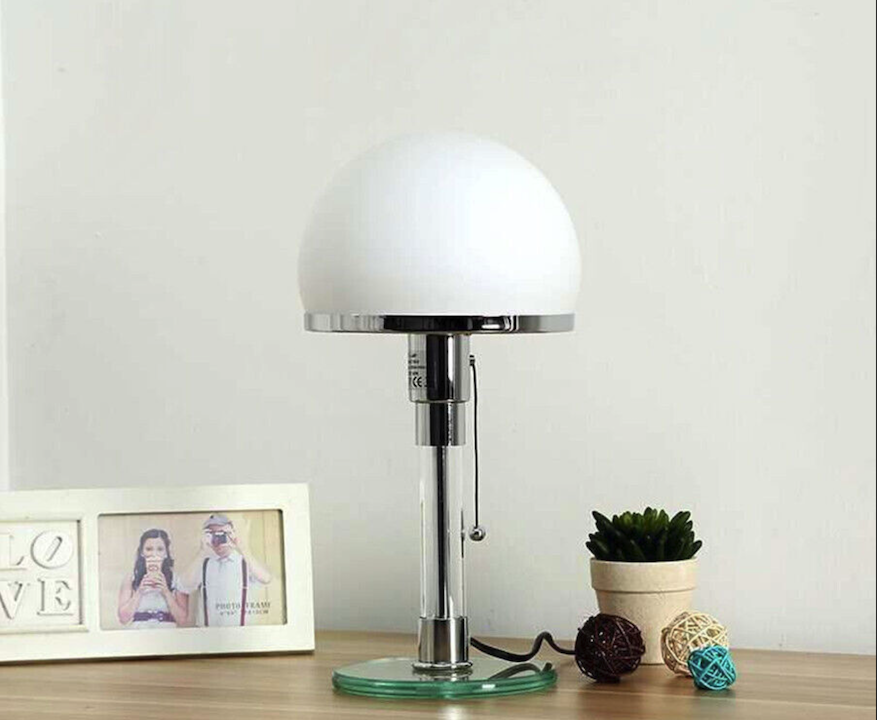
The Bauhaus, a German art school operational from 1919 to 1933, profoundly shaped modern design principles. Its philosophy prioritized functionality, clean lines, and a “form follows function” ethos. This approach, born from a desire to reconcile art with industrial production, rejected superfluous ornamentation and embraced material honesty. Key figures such as Walter Gropius, Marcel Breuer, and Marianne Brandt championed a stark aesthetic.
Early Bauhaus Lighting Design
Initial Bauhaus lighting Sellingni designs, while often prototypes, laid the groundwork for future industrial production. These early pieces, frequently crafted from metal and glass, exhibited a directness and purposefulness previously unseen in decorative lighting. They demonstrated a commitment to industrial materials and manufacturing processes.
The Impact of Industrialization
The post-World War I era saw a rapid acceleration of industrialization. The Bauhaus recognized this shift, aiming to produce designs that were both aesthetically pleasing and mass-producible. This intersection of art and industry is a hallmark of modern metal desk lamps, where precision engineering meets minimalist design.
Characteristics of Modern Metal Desk Lamps with Bauhaus Aesthetic
Modern metal desk lamps, when adhering to the Bauhaus aesthetic, exhibit a distinct set of characteristics. They are not merely light sources; they are sculptural objects, their shapes and materials speaking volumes.
Geometric Forms and Clean Lines
The most prominent feature is the prevalence of geometric forms – circles, squares, cylinders. These shapes are not chosen arbitrarily but for their inherent efficiency and structural integrity. Lines are sharp and angles are precise, contributing to a sense of order and rationality. You will rarely find curves or elaborate embellishments.
Understanding the Form-Function Nexus
Consider the arm of such a lamp. It is often a straight rod, perhaps articulated at a pivot point. Its purpose is to position the light, and its form directly reflects that function without decorative overlays. This directness creates visual clarity.
Material Honesty: Metal as a Primary Medium
Metal, typically steel or aluminum, is central to this aesthetic. It is chosen not only for its durability and malleability but also for its industrial connotations. The finishes are often matte or brushed, allowing the inherent qualities of the metal to be appreciated.
The Luster of Unadorned Surfaces
You will observe that these lamps often forgo ornate plating or excessive polish. Instead, the focus is on the raw beauty of the material itself – the subtle sheen of brushed aluminum, the dark gravitas of anodized steel. This honesty aligns with the Bauhaus principle of truth to materials.
Ergonomics and Adjustability
Functionality is paramount. Modern metal desk lamps are designed to provide optimal illumination for tasks. This often translates to adjustable features, such as swiveling heads, articulated arms, and dimmable light sources.
Precision in Movement
When you manipulate one of these lamps, you will notice the smooth, controlled movement of its joints. This is a testament to engineering precision, ensuring that the lamp can be positioned exactly where needed without undue effort.
Design Innovations and Contemporary Interpretations
While rooted in historical principles, contemporary designers continue to innovate within the Bauhaus framework. They explore new materials, manufacturing techniques, and lighting technologies, adapting the aesthetic to modern needs.
Integration of LED Technology
The advent of LED technology has significantly impacted modern desk lamp design. LEDs are energy-efficient, long-lasting, and can be integrated into incredibly sleek and thin profiles, further enhancing the minimalist aesthetic.
Miniaturization and Efficiency
The compact size of LED modules allows for lamp heads to be significantly smaller than those housing traditional bulbs. This contributes to the overall reduction of visual clutter and reinforces the clean lines of the design.
Sustainable Practices
A growing number of manufacturers are incorporating sustainable practices into their production of modern metal desk lamps. This includes using recycled metals, reducing waste, and employing energy-efficient manufacturing processes.
Longevity as a Sustainable Principle
The robust construction and timeless design of these lamps inherently promote sustainability by extending their lifespan. A well-designed metal desk lamp is not a transient trend item but a durable, long-term acquisition.
The Enduring Appeal of the Bauhaus Aesthetic
The Bauhaus aesthetic, despite its origins a century ago, continues to resonate due to its inherent practicality and timeless quality. It offers a counterpoint to ephemeral design trends.
Timelessness and Versatility
The clean lines and understated elegance allow these lamps to integrate seamlessly into a wide range of interior styles, from contemporary minimalist to more traditional settings. They are not beholden to fleeting fads.
A Design Language Without Expiration
Consider the enduring quality of a well-crafted tool. Its design is driven by its purpose, and as long as that purpose remains, the design retains its relevance. Bauhaus-inspired lamps share this fundamental characteristic.
A Focus on User Experience
Ultimately, the Bauhaus aesthetic is about enhancing the user experience through thoughtful design. A well-designed metal desk lamp provides optimal lighting without unnecessary visual distraction, allowing you to focus on your work.
Unobtrusive Efficiency
The lamp serves as a quiet partner in your workspace. Its design does not demand attention for its own sake but, rather, facilitates your tasks, operating with unobtrusive efficiency.
Integrating Modern Metal Desk Lamps into Your Workspace
Selecting and positioning a modern metal desk lamp with a Bauhaus aesthetic is more than just choosing a light source; it is about curating your workspace.
Placement and Lighting Considerations
Consider the primary function of your desk lamp. Is it for general ambient light, or focused task lighting? Position the lamp to minimize glare and maximize illumination on your work surface.
The Angle of Illumination
Experiment with the angle of the light. A direct downward beam is effective for reading, while a slightly angled light can reduce shadows if you are writing or drawing.
Complementary Furnishings
While these lamps can stand alone as strong design statements, they pair well with other minimalist or industrially inspired furniture. Consider materials such as natural wood, concrete, or glass to create a cohesive environment.
Creating Visual Harmony
The starkness of a metal desk lamp can be softened by the warmth of natural wood, or amplified by the cool, reflective surfaces of glass or polished concrete. The goal is to create a dialogue between objects rather than a cacophony.