

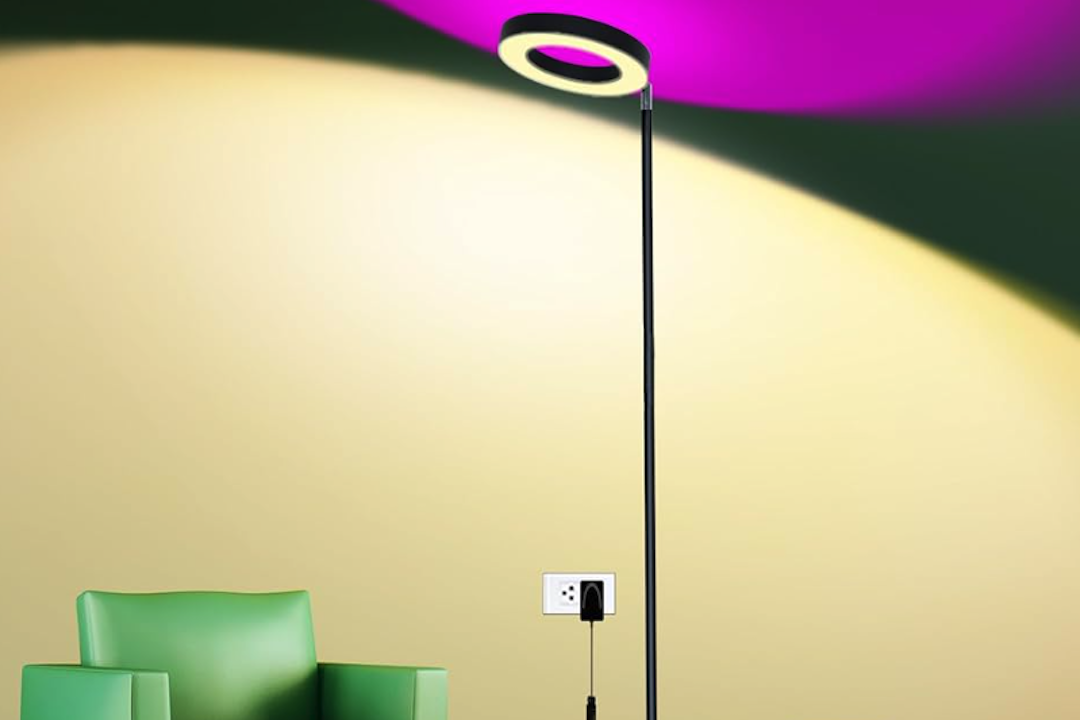
A smart voice-controlled dimmable floor lamp is essentially a lighting fixture you can command with your voice, often through a smart assistant like Alexa or Google Assistant, and adjust its brightness. These aren’t just for show; they offer a practical way to manage your home lighting, adding convenience and a touch of modern tech that can genuinely make daily tasks a bit smoother. Think of it as a helpful assistant that’s always there to light things up, or dim them down, without you needing to get up.
Beyond the cool factor, smart floor lamps Ratedecor bring some tangible benefits to your living space. They’re more than just a light source; they integrate into a broader home ecosystem and offer a level of control traditional lamps simply can’t match.
Convenience at Your Fingertips (or Voice)
Imagine you’re settled on the couch with a good book, or perhaps you’re already in bed at night. Instead of fumbling for a switch or getting up, a simple voice command can adjust the lighting exactly how you need it. This convenience extends to various scenarios, making your home a bit more responsive to your needs.
Hands-Free Operation
Having your hands full, whether carrying groceries, a fussy pet, or a sleepy child, often makes operating light switches a minor hassle. Voice control eliminates that. A quick “Hey Google, turn on the living room lamp” or “Alexa, dim the floor lamp to 50%” solves the problem without dropping anything. This is particularly useful in entryways or kitchens where you might frequently have your hands occupied.
Remote Control from Anywhere
Another advantage is being able to control your lamp from outside the room, or even outside your house. If you forgot to turn a light off before leaving for work, you can check and switch it off using your smartphone app. Conversely, if you’re coming home to a dark house, you can turn on the lamp a few minutes before you arrive, creating a welcoming and safer environment. This remote functionality offers peace of mind and an added layer of home security.
Enhanced Ambiance and Mood Settings
Lighting plays a significant role in how we perceive and experience a space. A smart dimmable floor lamp provides the flexibility to tailor the lighting to various activities and moods, moving beyond a simple “on” or “off” state.
Adjustable Brightness for Every Task
Whether you’re reading, watching a movie, working on a laptop, or just relaxing, different activities benefit from different light levels. A smart dimmable lamp lets you fine-tune the brightness to precisely what you need. Bright for intricate tasks, dim for winding down, and anything in between. This precision helps reduce eye strain and creates a more comfortable environment.
Color Temperature Options
Some advanced smart floor lamps also offer adjustable color temperature, moving from warm, inviting yellows to cool, crisp whites. Warm light is generally preferred for relaxation and evening hours as it can help with sleep cycles, while cooler light can boost alertness and productivity during the day. Being able to switch between these can significantly impact your daily routines and overall well-being.
Integrating with Your Smart Home
A major benefit of smart dimmable floor lamps is their ability to integrate seamlessly with existing smart home ecosystems. This isn’t about just one device working by itself; it’s about it becoming part of a larger, interconnected system.
Compatibility with Voice Assistants
Most smart floor lamps are designed to work with popular voice assistants, which are often the central hub of a smart home setup.
Alexa Integration
If you have an Amazon Echo device, most smart floor lamps will connect to it without much fuss. Once linked, you can use commands like “Alexa, turn on the floor lamp,” “Alexa, set the floor lamp to 70% brightness,” or even include it in a routine, a sequence of actions triggered by a single command.
Google Assistant Connectivity
Similarly, Google Home and Nest devices are compatible with a wide range of smart lamps. You can use phrases such as “Hey Google, dim the living room lamp” or “Hey Google, turn off the movie lamp.” Google Assistant often offers a user-friendly interface for setting up and managing your smart devices.
Other Voice Platforms (Siri, etc.)
While Alexa and Google Assistant are dominant, some smart lamps also offer compatibility with Apple HomeKit (Siri) or other less common platforms. It’s always worth checking the product specifications if you have a preferred ecosystem you want to stick with.
Routines and Automation Potential
This is where smart lighting truly shines. Instead of just controlling individual devices, you can set up automated sequences that respond to your schedule or specific events.
Schedule-Based Lighting
You can program your floor lamp to turn on automatically at sunset and off at bedtime, helping to maintain a consistent light schedule without manual intervention. This can be useful for security, making it appear someone is home, or a simple convenience when you return home each day.
Event-Triggered Actions
Integrate your lamp with other smart devices. For example, if your smart door sensor detects you’ve opened the front door, your floor lamp could automatically turn on to a welcoming brightness. Or, if you have a smart TV, your floor lamp might dim automatically when you start watching a movie, enhancing the cinematic experience. These automations build a more intuitive and responsive home environment.
What to Look for When Buying
With various options on the market, choosing the right smart voice-controlled dimmable floor lamp requires a bit of consideration. Not all lamps are created equal, and understanding the key features will help you make an informed decision.
Connectivity and Protocols
The way your lamp communicates with your smart home is crucial for its functionality and ease of integration.
Wi-Fi lamps
Many smart lamps connect directly to your home Wi-Fi network. This is often the simplest setup, as it usually doesn’t require an additional hub. However, a large number of Wi-Fi devices can sometimes strain your network, and network reliability directly impacts the lamp’s responsiveness.
Zigbee/Z-Wave lamps (requiring a hub)
Other lamps use protocols like Zigbee or Z-Wave. These typically require a separate hub (like a Philips Hue Bridge or SmartThings hub) to function. While this adds an extra piece of hardware, these protocols are often more reliable, create their own mesh network, and can handle a larger number of devices without bogging down your Wi-Fi. If you already have a hub, these can be a good option.
Bluetooth-enabled lamps
Some lamps offer Bluetooth connectivity, which allows for direct control from your phone within a limited range. While this can be convenient for simple, local control, it doesn’t offer the same remote access or integration capabilities as Wi-Fi or hub-based systems. Bluetooth is often found as a secondary option alongside Wi-Fi.
Design and Aesthetics
A floor lamp isn’t just a gadget; it’s also a piece of furniture that contributes to your home’s decor.
Style and Finish
Consider the overall aesthetic of your room. Do you prefer a modern, minimalist design, an industrial look, or something more classic? Lamps come in various finishes like brushed metal, chrome, wood, and matte black or white. Choose something that complements your existing furniture and color scheme.
Size and Placement
Think about where the lamp will sit. A tall, slender lamp might fit well in a corner, while a lamp with an articulated arm might be better for reading beside a couch. Measure your space to ensure the lamp’s footprint and height are appropriate. Some lamps offer upward-facing light for ambient room illumination, while others have adjustable heads for task lighting.
Light Quality and Features
Beyond just dimming, look at the lamp’s ability to produce different types of light.
Lumens and Brightness Range
Lumens measure the total amount of visible light from a lamp. A higher lumen count means a brighter light. Check the specifications for the maximum lumen output to ensure it’s bright enough for your needs, and also consider how low it can dim for mood lighting. A good range allows for flexibility.
Color Temperature Adjustment (Tunable White)
As mentioned, some lamps allow you to adjust the color temperature, often measured in Kelvins (K). Lower Kelvin values (2700K-3000K) produce warmer, yellowish light, while higher values (4000K-5000K+) produce cooler, bluer white light. This feature offers more versatility for different activities and times of the day.
RGB Color Options
Beyond tunable white, some smart lamps offer the full spectrum of RGB (Red, Green, Blue) colors. This can be fun for parties, accent lighting, or creating specific moods, though it’s not a necessity for everyone. If you’re looking for purely functional lighting, RGB might be an unnecessary extra.
Setting Up Your Smart Floor Lamp
Getting your new smart lamp up and running is typically straightforward, but a few steps are usually involved.
Unboxing and Physical Assembly
Most floor lamps require some basic assembly. This usually involves screwing together a few pole sections, attaching the base, and then fitting the lamp head or shade. Instructions are usually included and pretty easy to follow.
Initial Power-On
Once assembled, plug in the lamp. It will typically turn on or enter a pairing mode, indicated by blinking lights or a specific color. This is the stage where the lamp is ready to connect to your smart home system.
Pairing with Your Smart Home App
This is the central part of the setup.
Manufacturer’s App
Most smart lamps require you to download their specific manufacturer’s app first. This app is used to register the lamp, set up its initial preferences, and often serves as a primary control interface. You usually connect the lamp to your home Wi-Fi through this app.
Connecting to Voice Assistant
Once the lamp is set up in its native app, you’ll then link that manufacturer’s account to your voice assistant app (Alexa, Google Home). In the Alexa or Google Home app, you typically search for “Skills” (Alexa) or “Works with Google” (Google Home) for the lamp’s brand, enable it, and then log in using your manufacturer’s app credentials. Your voice assistant will then discover the new device.
Naming Your Device
Finally, give your lamp a memorable and easy-to-pronounce name. “Living Room Floor Lamp,” “Reading Light,” or “Corner Lamp” work well. Avoid names that sound similar to other devices or voice commands to prevent confusion. This is important for smooth voice control.
Practical Usage Tips
Once your smart floor lamp is set up, a few practical approaches can help you get the most out of it.
Grouping and Scenes
Don’t just think about controlling one lamp. Think about how it fits into the broader lighting scheme of your room or home.
Bedroom vs. Living Room Lighting
If you have multiple smart lights, group them by room. “Turn on living room lights” can activate your floor lamp, ceiling light, and any other connected fixtures in that space simultaneously. This creates a unified lighting experience without individual commands.
Reading, Movie, and Relax Scenes
Set up “scenes” or “routines” for different activities. A “Movie Night” scene might dim the floor lamp to 20% and change the color to a warm, inviting glow, while turning off other lights. A “Reading” scene might brighten the floor lamp to 80% with a cooler white light. This transforms your room with a single command.
Troubleshooting Common Issues
Smart devices can sometimes have minor hiccups. Knowing a few common fixes can save you frustration.
Wi-Fi Connectivity Problems
If your lamp isn’t responding, first check your Wi-Fi router. Is it on and working? Try restarting it. Sometimes, simply unplugging and replugging the lamp can force it to reconnect to the Wi-Fi. Ensure the lamp isn’t too far from your router or an access point.
Voice Command Recognition Issues
If your voice assistant isn’t understanding you, try speaking clearly and ensuring you’re using the exact name you assigned to the lamp. Sometimes, re-syncing your devices in the Alexa or Google Home app can resolve recognition problems. Check if there are any conflicting device names.
App Glitches
Occasionally, the manufacturer’s app or your smart home app might act up. Close and reopen the app, or if that doesn’t work, clear the app’s cache or reinstall it. Software updates can also sometimes introduce or fix minor bugs.
A smart voice-controlled dimmable floor lamp is more than just a novelty; it’s a functional addition that can enhance the usability and atmosphere of your home. By choosing wisely and incorporating it thoughtfully into your smart home ecosystem, you can enjoy a new level of convenience and control over your personal space.